


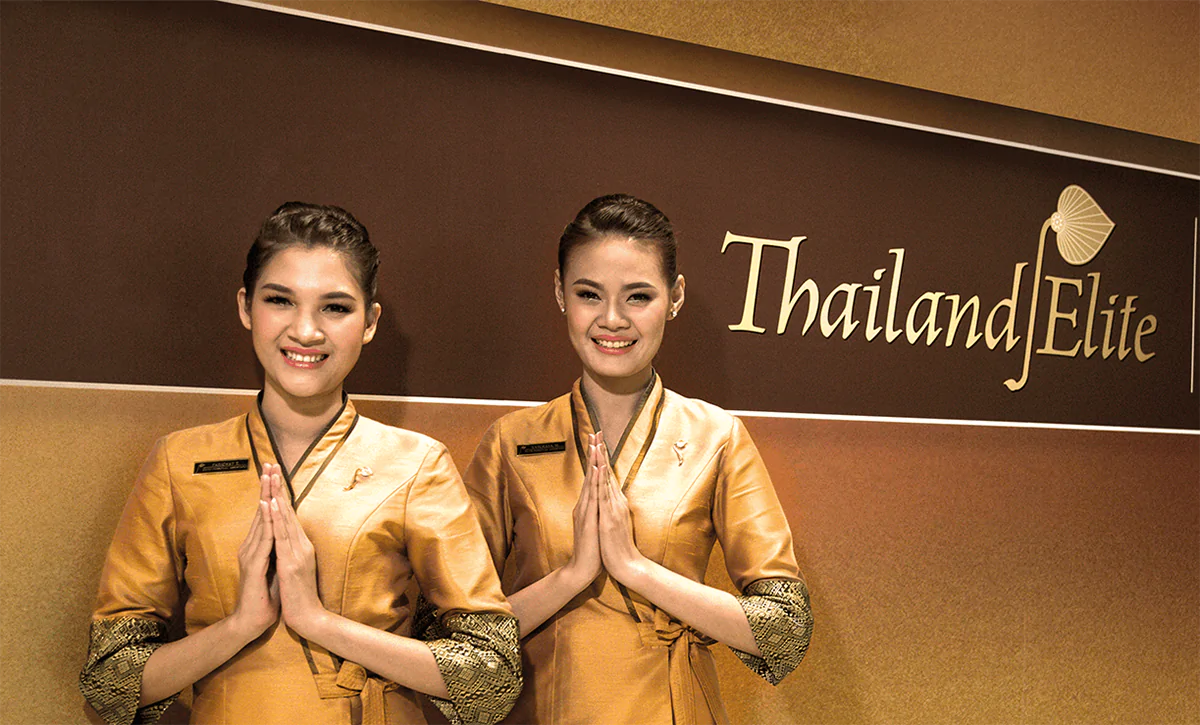
The Thailand Elite Visa, officially renamed the Thailand Privilege Card in October 2023, is a government-backed membership program that grants long-term residency in Thailand (5 to 20 years, depending on tier) in exchange for a one-time fee. It's the fastest legal route to long-stay status in Thailand that doesn't require retirement age, a work permit, or a property purchase, which is exactly why so many of our Phuket buyers ask about it before or alongside a real estate purchase.
This guide covers the current 2026 pricing tiers, who actually qualifies, what the card does and doesn't let you do (including property ownership and the 2024 tax rule), and how it compares to the two other long-stay options buyers usually consider: the LTR Visa and the O-A Retirement Visa.
Quick answer
- Official name: Thailand Privilege Card (still widely searched and marketed as "Thailand Elite Visa")
- Cost: THB 650,000 to THB 5,000,000 depending on tier
- Length of stay: 5, 10, 15, or 20 years, multi-entry
- Managed by: Thailand Privilege Card Co., Ltd., a state enterprise under the Tourism Authority of Thailand
- Does it let you own property? No. It changes nothing about Thailand's foreign property ownership rules.
What Is the Thailand Elite Visa (Now the Thailand Privilege Card)?
The program launched in 2003 as the "Thailand Elite" visa and was restructured and rebranded to the Thailand Privilege Card in late 2023, with updated tiers and pricing. Both names refer to the same government program, and you'll see it marketed under either name depending on the agent or site you're reading, including the official Thailand Privilege Card site.
At its core, it's a membership: you pay once, and in return you get a multi-year "Privilege Entry Visa" plus a set of lifestyle and administrative perks (fast-track immigration, concierge services, help with the paperwork every long-term expat in Thailand eventually has to deal with).
It is not a work visa, an investment visa, or a path to Thai citizenship. It's best understood as a long-stay convenience product for people who want to live in Thailand part-time or full-time without going through the retirement, marriage, or business visa routes.
Thailand Elite Visa Cost 2026: All 5 Membership Tiers
As of 2026, the program has five tiers. Prices are one-time membership fees, not annual payments.
| Tier | Fee (THB) | Validity | Cost per Year |
|---|---|---|---|
| Bronze | 650,000 | 5 years | ~130,000 |
| Gold | 900,000 | 5 years | ~180,000 |
| Platinum | 1,500,000 | 10 years | ~150,000 |
| Diamond | 2,500,000 | 15 years | ~166,700 |
| Reserve | 5,000,000 | 20 years | ~250,000 (invitation only) |
A few things worth knowing before you compare these numbers to a condo down payment or a retirement visa:
- Family members can be added, usually for an additional fee per dependent, which changes the per-person math significantly for couples or families.
- The fee is one-time, but you're still required to complete standard immigration tasks: the 90-day address report and any re-entry documentation, though the program's concierge team typically handles this for you.
- Prices have risen with each restructuring. The program raised prices in 2021 and again with the 2023 rebrand. If you're weighing this against other long-stay routes, don't assume today's price will hold for future renewals or comparisons.
What You Actually Get: Elite Visa Benefits and Privileges
The visa itself (multi-year, multi-entry status) is only part of what you're buying. The rest is a bundle of services:
- Fast-track immigration and airport VIP services at major Thai airports, including a personal escort and lounge access
- Assistance opening a Thai bank account, which is otherwise one of the more frustrating parts of setting up long-term life in Thailand as a foreigner, and directly useful if you're also financing or paying for property here
- Help with the 90-day address reporting requirement, handled by the program rather than you standing in line at immigration
- A Thai driving license eligibility pathway
- No proof of income or retirement savings required for approval, unlike the O-A Retirement Visa, which has strict financial thresholds
- 24/7 concierge and dedicated relationship manager for higher tiers
For someone buying a condo in Phuket, the banking assistance and simplified admin are the two benefits that actually save time during a purchase, more than the airport lounge access.
Who Is Eligible for the Thailand Elite Visa?
Eligibility is deliberately broad, which is the main reason the program appeals to buyers who don't fit neatly into "retiree" or "employee" visa categories:
- Valid passport with at least 12 months' remaining validity and a minimum of two empty pages
- No history of overstaying a Thai visa
- No criminal record and no history of being deported from Thailand
- Sufficient funds to pay the one-time membership fee (there's no separate income or bank-balance requirement beyond the fee itself)
- Applicants must generally be 20 years or older, though family packages allow minors to be included as dependents
Because there's no age floor tied to retirement and no income test, it's the option digital nomads, working-age investors, and business owners tend to use when they don't yet qualify for (or don't want) a retirement or work visa.
What the Elite Visa Does Not Cover
This is the section most sales pages skip, and it's the part that matters most if you're also planning a property purchase.
No work rights
The Privilege Card does not grant permission to work in Thailand under any circumstances. If you take a job or start earning Thailand-sourced income, you need a separate Non-B visa and work permit. Holding an Elite Visa while working illegally carries the same penalties as working illegally on a tourist visa.
The 2024 foreign income tax rule
In 2024, Thailand's Revenue Department implemented Instruction Por. 161/2566, which changed how foreign-sourced income is taxed for anyone classified as a Thai tax resident (present in Thailand 180+ days in a calendar year). Under this rule, foreign income remitted into Thailand can be subject to Thai personal income tax, regardless of the year it was earned.
This applies to Elite Visa holders exactly the same as anyone else. The visa provides no tax exemption or special status. If you plan to live in Thailand long-term on this visa and bring in overseas income or savings to fund a property purchase, it's worth getting local tax advice before you remit large sums, timing and structuring can materially change your exposure.
Property ownership: what the visa changes (and doesn't)
This is the single most common misconception we hear from buyers. The Elite Visa does not change Thailand's foreign property ownership laws in any way. Specifically:
Foreigners still cannot own land outright in Thailand under the Elite Visa or any other visa.
Foreign condo ownership is still capped at 49% of the total saleable area in any single building, exactly as it is for any other foreign buyer.
The visa does not create a fast-track or exemption for the Foreign Business Act or land ownership restrictions.
What the visa does make easier is the administrative side of a purchase: opening a Thai bank account to transfer funds via the required Foreign Exchange Transaction (FET) form, and having long-term resident status that simplifies utility connections, condo juristic person registration, and other paperwork tied to actually living in a property you buy. If you're weighing whether to get the visa before or after a purchase, see our guide on buying a condo in Phuket as a foreigner for how the FET and title transfer process works independently of visa status.
Thailand Elite Visa vs. LTR Visa vs. O-A Retirement Visa
If you're evaluating long-stay options as a property buyer, these are the three routes worth comparing directly.
| Factor | Elite Visa (Privilege Card) | LTR Visa | O-A Retirement Visa |
|---|---|---|---|
| Upfront cost | THB 650,000 to 5,000,000 | Government fee only (~THB 50,000 total) | Low government fee |
| Income/asset requirement | None beyond membership fee | Yes, high thresholds (income or investment) | Yes, THB 800,000 in a Thai bank or monthly income proof |
| Age requirement | 20+ | Varies by category | 50+ |
| Work rights | None | Yes, for qualifying categories | None |
| Renewal | One-time fee for full term | Annual, tied to maintaining qualification | Annual renewal with financial proof |
| Best for | Buyers/nomads who don't qualify for LTR or retirement categories and want simplicity | High-net-worth remote workers, investors, and professionals who meet strict thresholds | Retirees 50+ with liquid savings who don't mind annual renewal admin |
If you're under 50 and don't have the income or investment history the LTR Visa requires, the Elite Visa is often the only long-stay option that doesn't force you into a work visa structure. If you're over 50 with THB 800,000 sitting in savings, the O-A Retirement Visa achieves a similar outcome for a fraction of the cost, at the price of annual paperwork.
Is the Thailand Elite Visa Worth It for Property Buyers in Phuket?
It depends on what you're solving for:
It's worth it if:
- You're buying property in Phuket but don't qualify for the LTR or Retirement visa
- You value not dealing with annual visa renewals for 5 to 20 years
- The banking and administrative support genuinely saves you time (this is real, not just marketing)
- You're relocating a family and want one straightforward application rather than juggling multiple visa categories
It's probably not worth it if:
- You already qualify for the LTR Visa (better value, work rights included)
- You're 50+ with sufficient retirement savings (O-A Retirement Visa is dramatically cheaper)
- You're only planning short annual visits rather than genuine long-term residence
- You're hoping it provides tax advantages or property ownership rights it doesn't offer
If you're buying in Phuket
Whether the Elite Visa makes sense for you usually comes down to your age, your existing savings, and how long you plan to stay. If you're planning a property purchase in Phuket alongside a long-stay visa decision, talk to our team about how the FET transfer, condo quota, and visa timing fit together, since sequencing these correctly can save weeks of paperwork.
Frequently Asked Questions
How much does the Thailand Elite Visa cost in 2026?
Between THB 650,000 (Bronze, 5 years) and THB 5,000,000 (Reserve, 20 years, invitation only), depending on the tier you select.
Who is eligible for the Thailand Elite Visa?
Applicants aged 20 or older with a valid passport, no overstay history, and no criminal record. There's no income or asset test beyond paying the membership fee, which is what separates it from the LTR and Retirement visas.
Can a US citizen live permanently in Thailand on this visa?
Not permanently in the citizenship sense, since Thailand doesn't offer a path to permanent residency through this program. US citizens can hold the visa for its full 5 to 20 year term and renew or upgrade at expiration, which functions as long-term residence in practice.
What is the 20,000 baht rule?
This refers to Thai immigration's general requirement that visitors show proof of at least THB 20,000 per person (THB 40,000 per family) in funds when entering the country. It applies broadly at immigration checkpoints and isn't a separate Elite Visa requirement, though it's worth having proof of funds available regardless of visa type.
Does the Elite Visa let me buy property in Thailand?
No. It doesn't change foreign ownership rules for land or the 49% foreign quota on condos. It simplifies the residency and banking side of living in a property you buy, not the ownership rules themselves.
Can I work in Thailand on an Elite Visa?
No. You need a separate Non-B visa and work permit to work legally, regardless of which Elite Visa tier you hold.
Is the Thailand Elite Visa the same as the Thailand Privilege Card?
Yes. The program was rebranded from "Thailand Elite Visa" to "Thailand Privilege Card" in October 2023. Both names refer to the same government program and are used interchangeably in marketing and search.