

Rawai and Nai Harn are a different proposition from Bangtao, Laguna, Patong or Phuket Town.
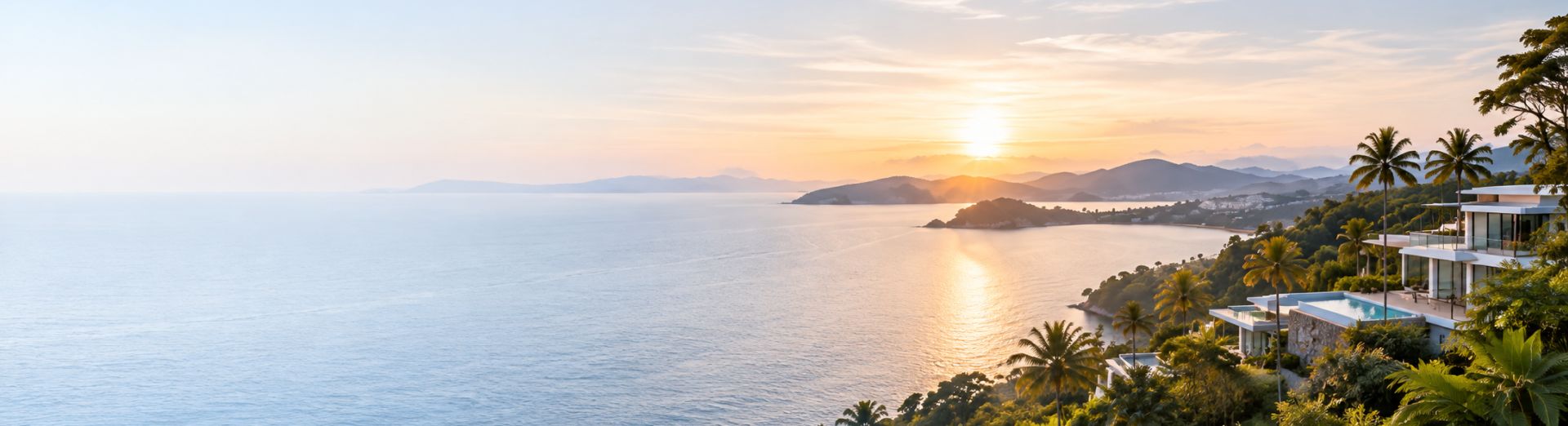
This is southern Phuket living. The area is less polished and master-planned than Laguna, less tourist-dominated than Patong, and generally more relaxed than the increasingly fashionable Bangtao/Cherngtalay corridor. It has developed organically around local villages, villa communities, restaurants, gyms, schools, cafés and a substantial long-term international population.
The distinction between the two names is worth understanding. Rawai covers a large part of Phuket's southern tip and includes Rawai Beach, Sai Yuan and numerous inland residential neighbourhoods. Nai Harn generally refers to the western side centred around Nai Harn Beach, Nai Harn Lake and the surrounding residential streets.
And there is one important misconception to clear up immediately: Rawai Beach isn't really a swimming beach. It is a working waterfront filled with longtail boats, seafood restaurants and boats heading to nearby islands. For swimming, residents generally head to Nai Harn or Ya Nui Beach.
That little distinction tells you quite a lot about Rawai. It isn't really a conventional Phuket resort destination.
It's somewhere people live.
Why People Love Rawai & Nai Harn
The biggest attraction is that the area manages to retain a genuine community feeling despite having a huge international population.
People come for a few months and somehow remain for ten years.
There are cafés where staff know their regular customers, gyms where everybody eventually recognises everybody, neighbourhood restaurants that survive on repeat business rather than passing tourists, and villa communities tucked into quiet sois where many residents live year-round.
Nai Harn also gives the area something extremely important:
A genuinely excellent beach.
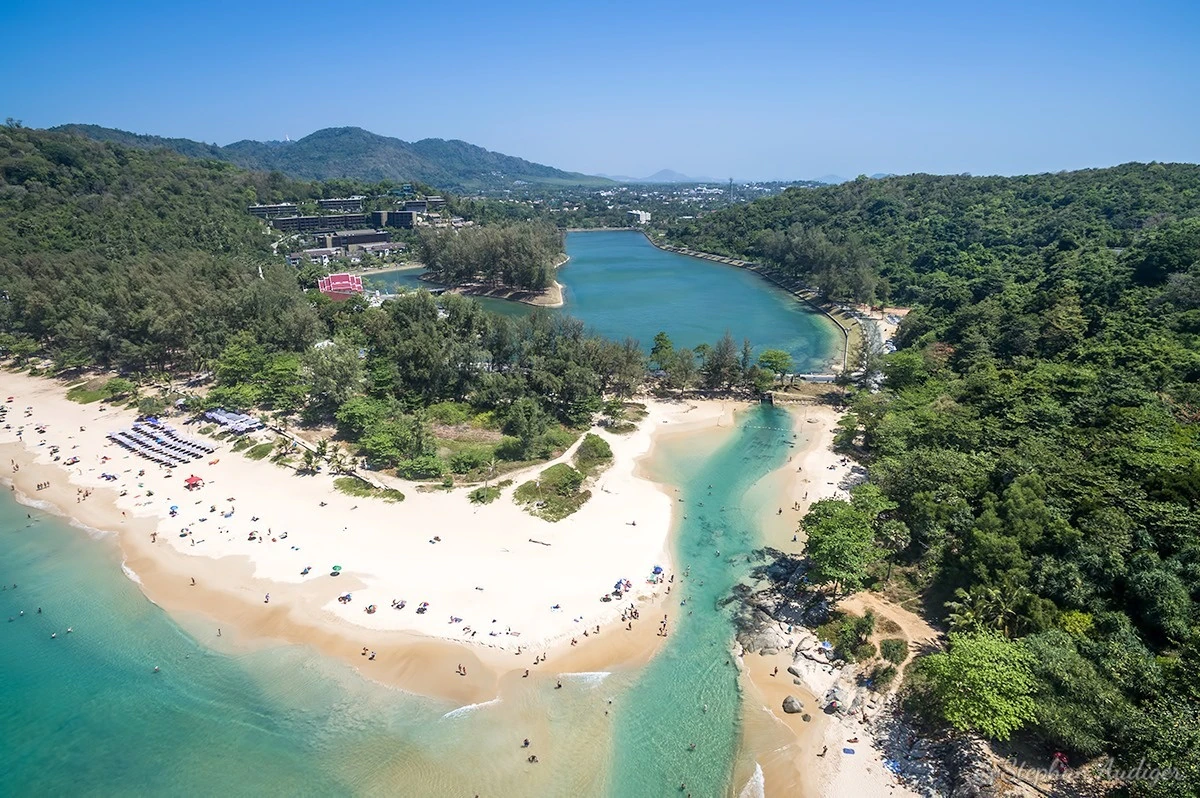
Nai Harn is a beautiful bay surrounded by green hills, with the lake immediately behind it. During favourable sea conditions it is one of southern Phuket's most attractive swimming beaches.
Then you have Ya Nui nearby, Rawai waterfront on the other side, Promthep Cape at the southern tip, and easy access to boats heading towards Coral Island, Bon Island and other nearby islands.
The result is a location that still feels connected to the sea without functioning entirely as a tourist resort.
Rawai also generally offers more property for your money than Bangtao, particularly when comparing private pool villas. That's another major reason long-term residents gravitate south.
What's the Main Catch?
You're at the bottom of the island.
That sounds obvious until you actually live here.
If your life revolves around Rawai, Nai Harn, Chalong and Phuket Town, it isn't much of a problem.
If your friends live in Bangtao, your children attend school in Thalang, you frequently play golf in northern Phuket or your work requires regular trips to the airport, suddenly geography becomes very important.
Phuket is a long island.
Living in Rawai and frequently travelling north means repeatedly dealing with Chalong Circle, Chao Fah roads, Phuket Town traffic and the island's north-south bottlenecks.
There is another catch:
You really need transport.
Rawai is spread out. A café, supermarket, beach and gym may all be “nearby”, yet walking between them in 32°C heat on roads with inconsistent pavements is another matter entirely. A car or scooter makes life dramatically easier.
What Kind of Lifestyle Does Rawai & Nai Harn Attract?
The lifestyle is noticeably more casual than Bangtao.
Think:
shorts + flip-flops + scooter + gym + beach + dog + coffee + sunset beer.
Rawai attracts people who actually want to settle into Phuket rather than recreate a resort holiday every day.
There is a major fitness community, plenty of remote workers, retirees, young families, divers, sailors, Muay Thai enthusiasts, restaurant owners, entrepreneurs and people who originally came to Phuket for three months sometime around 2011 and apparently forgot to leave.
Nai Harn adds a stronger beach lifestyle.
Early mornings around Nai Harn Lake are particularly representative of the area. You'll see runners, walkers, cyclists, parents, dogs, people exercising and residents stopping for coffee after training.
It is less about being seen and more about establishing a comfortable routine.
Property Prices in Rawai & Nai Harn
Rawai villas and Rawai condos remain some of Phuket's more accessible established west/south-coast property markets, although prices have increased substantially.
Current September 2026 developer inventory data puts the median asking price at roughly ฿7.9 million in Rawai and ฿11.8 million in Nai Harn, although medians should never be confused with the price of a typical individual property.
As a useful broad guide for buyers:
| Property Type | Approximate Price Range |
|---|---|
| Studio / entry-level condo | ฿2.5m–฿4m+ |
| Modern 1-bedroom condo | ฿3.5m–฿6m+ |
| 2-bedroom condo | ฿5m–฿10m+ |
| Premium / larger 2–3BR condo | ฿8m–฿18m+ |
| Older / entry-level pool villa | ฿7m–฿12m+ |
| Modern 2–3 bedroom pool villa | ฿10m–฿20m+ |
| Larger 3–4 bedroom villa | ฿15m–฿30m+ |
| Premium Rawai/Naiharn villa | ฿25m–฿50m+ |
| Exceptional sea-view/luxury villa | ฿50m–฿100m+ |
Treat those as orientation rather than valuation. New-build, resale, land size, sea views, walkability to Nai Harn, construction quality and ownership structure can create enormous differences.
The significant point for buyers is choice. Rawai has everything from relatively inexpensive condominiums to very substantial private villas.
What Type of Tourist Does Rawai Attract?
Not usually the first-time Phuket tourist looking for a big resort and organised entertainment.
Rawai particularly attracts:
- Repeat Phuket visitors.
- Long-stay winter residents.
- Couples.
- Remote workers.
- Fitness travellers.
- Muay Thai/MMA visitors.
- Families renting villas for several weeks or months.
- Divers and sailors using Chalong.
- People who rent scooters and explore independently.
- Visitors who want restaurants and beaches without Patong's intensity.
It is especially good for someone staying a month rather than three nights.
A three-night tourist may find Rawai inconvenient.
A three-month resident starts understanding why people never leave.
The Best Restaurants in Rawai & Nai Harn
This is one of Rawai's strongest points.
Unlike some resort destinations where restaurants depend heavily on tourists, Rawai's large resident population supports an extraordinarily varied year-round restaurant scene.
Salaloy Seafood
For an old-school Rawai experience, start here.
Salaloy sits directly opposite Rawai Beach and specialises in Thai seafood. It isn't about elaborate interior design or Instagram presentation. You come for seafood, Thai dishes and the atmosphere of eating beside Rawai's working waterfront.
Go for: seafood, Thai food and the proper Rawai Beach experience.
Fresca - Kitchens & Deli
Fresca is a very different proposition.
It combines a bistro, deli, steakhouse, seafood and wine-oriented concept and is particularly well known locally for its Sunday brunch.
Sunday brunch is exactly the sort of occasion where Rawai's resident community becomes obvious: friends, families and long-term residents spending several hours eating rather than simply stopping for a quick tourist meal.
Go for: Sunday brunch, steaks, seafood, wine and long lunches.
La Salada Rawai
La Salada is one of the area's Spanish options, concentrating on tapas and Spanish cooking.
It's the kind of smaller independent restaurant that Rawai does particularly well. Rather than another large tourist-oriented venue, it gives residents somewhere intimate to return to regularly.
Go for: tapas, Spanish flavours and sharing food.
Unni’s Restaurant Nai Harn
Unni's has become a familiar Nai Harn name, combining international food, Mexican influences and cocktails in a casual setting.
It suits the area perfectly: relaxed enough to visit frequently rather than somewhere reserved for special occasions.
Go for: casual dinner, Mexican-inspired dishes and cocktails.
M&M's Pizzeria & Spaghetteria
M&M's is a long-standing Italian option around Nai Harn.
Pizza, pasta and familiar Italian comfort food are the attraction. It's precisely the kind of uncomplicated neighbourhood restaurant that develops loyal regulars.
Go for: pizza, pasta and an unfussy dinner.
Sala Mexicali
Sala Mexicali covers Mexican, Tex-Mex, Californian and American comfort-food territory.
The portions and flavours suit a casual evening with friends rather than fine dining, and it has been part of the area's international restaurant scene for years.
Go for: Mexican/Tex-Mex, BBQ flavours and comfort food.
BOOST | Cafe & Restaurant Phuket
BOOST represents the other side of Rawai.
Breakfast, brunch, coffee, juices and health-conscious food make it extremely popular with the area's fitness crowd.
After spending an hour making yourself miserable in the gym, you can come here and eat something healthy enough to convince yourself it was all worthwhile.
Go for: breakfast, brunch, healthy bowls, coffee and juices.
Locanda Del Pescatore
Locanda Del Pescatore is another highly regarded Italian restaurant, but with a stronger emphasis on the dining experience than simply pizza and pasta.
Its combination of Italian cooking and seafood makes it particularly appropriate for Phuket.
Go for: Italian cuisine, seafood and a more leisurely dinner.
You've Never Really Been to Rawai If You've Never...
Gone to the Rawai waterfront, bought seafood, watched the longtail boats and then headed to Nai Harn for the afternoon before catching sunset at Promthep Cape.
Rawai Seafood Market remains one of the area's defining experiences. Rawai Beach is still associated with the local Chao Le community, fishing and boats rather than rows of sun loungers.
That combination — seafood + boats + beach + sunset — explains southern Phuket better than any shopping mall ever could.
The Hidden Gem of Rawai / Nai Harn
I'd give this one to Ya Nui Beach and the surrounding southern coastline.
Ya Nui is tiny compared with Nai Harn, but that's part of the attraction. It sits between Promthep Cape and Windmill Viewpoint and feels completely different from Phuket's large commercial beaches.
Then explore the smaller roads around the cape and Rawai rather than simply following the main road.
The other hidden gem isn't a single destination at all.
It's the back sois of Rawai.
There are beautiful little residential pockets, restaurants, cafés and villa neighbourhoods hidden only a few hundred metres from busy Wiset Road. This is why judging Rawai purely by driving down the main road gives completely the wrong impression.
Shopping Malls – What's Nearby?
Rawai doesn't have a huge mall.
For everyday life, that isn't much of a problem. There are supermarkets, local markets, Makro, Lotus's and smaller commercial centres throughout the south.
For proper mall shopping, Robinson Lifestyle Chalong is now the most practical major option for Rawai residents. It has more than 300 brands, restaurants, a department store, food options, cinema and family entertainment.
Villa Market Chalong Phuket is excellent for imported groceries, while HomePro Village Chalong becomes surprisingly important once you actually own a villa.
For serious shopping, Central Phuket remains the big destination in the Phuket Town/Wichit area.
So the practical hierarchy is:
Daily groceries: Rawai itself
Imported food/home shopping: Chalong
Normal mall: Robinson Chalong
Major shopping expedition: Central Phuket
Closest Golf Courses
Golf is one area where Rawai loses decisively to Bangtao.
There isn't an 18-hole championship course sitting next door.
Phuket Country Club in Kathu is one of the established options and offers a full course plus driving-range facilities.
Red Mountain and Loch Palm in Kathu are also practical island options, but you're travelling north to play.
For somebody who plays golf once or twice a month, no major problem.
For somebody who wants to finish breakfast and be teeing off ten minutes later, Bangtao/Laguna has the advantage.
Padel Courts
Yes, Rawai has joined Phuket's padel obsession too.
Rawai Padel provides courts directly in Rawai, while Padel Phuket @ Chalong is another convenient nearby option.
Padel works particularly well here because Rawai already has a large resident community. It quickly becomes as much a social network as a sport.
Move to Rawai knowing nobody, start playing padel three times a week, and that problem probably won't last very long.
Gyms, Fitness and Other Sports Options
This is where southern Phuket becomes ridiculous.
The Cult Fitness Society Rawai is one local fitness option, while Power Gym Rawai provides another conventional gym choice. Motus Cultura is a fantastic place for Crossfit enthusiasts.
Then there is Muay Thai, yoga, functional training, swimming, running around Nai Harn Lake, cycling, beach training and padel.
And just up the road in Chalong is Soi Ta-Iad. Phuket's famous Fitness Street, where Muay Thai camps, MMA gyms, strength facilities, healthy restaurants and protein-shake cafés have created an entire neighbourhood around people voluntarily exhausting themselves. Robinson Chalong itself sits at the end of this fitness corridor.
For runners, Nai Harn Lake is fantastic.
For swimmers, Nai Harn.
For cyclists, southern Phuket provides plenty of hills if you have committed some terrible crime for which you believe punishment is required.
Rawai is one of Phuket's strongest areas for an active lifestyle.
Places to Have Some Adult Beverages
Rawai nightlife is much more substantial than people sometimes expect.
It isn't Patong, and most residents would consider that a feature.
The Rawai beachfront has casual bars and places for sunset drinks. Sai Yuan has sports bars, restaurants and resident-oriented drinking spots, while there are later-night venues around the Rawai entertainment areas.
The Future Bar and Pleasure Dome Bar Rawai are among the area's dedicated bars.
But the more representative Rawai evening is probably:
Dinner → a couple of beers/cocktails → talk nonsense with people you know → home at a vaguely respectable hour.
Sports bars also have a genuine local following, and the area has enough long-term British, European, Australian and other expatriates that finding somewhere showing major football, rugby, F1 or UFC events isn't difficult.
International Schools
This is another reason Rawai works as a genuine residential area.
International School of Phuket (ISP) operates in Rawai itself.
There are also primary and secondary facilities from Lighthouse Primary International School Phuket and Lighthouse Secondary International School @ Rawai.
Nearby Chalong has BCIS Phuket International School, while HeadStart International School, Phuket (City Campus) is farther north in Wichit. HeadStart runs a Rawai/Chalong school-bus route to its City Campus, which shows how established the southern family catchment has become.
For property buyers with children, this matters enormously.
You can genuinely build family life around southern Phuket without driving to Thalang every morning.
International Hospitals & Healthcare
Here's one weakness buyers should understand clearly:
Rawai does not have a major full-service international hospital.
It does have everyday private healthcare. คลินิกกรุงเทพภูเก็ต สาขาราไวย์ Bangkok Phuket Clinic Rawai provides local medical services under the Bangkok Hospital network.
Chalong Hospital is relatively nearby for general/public hospital care.
For major private hospital treatment, specialist procedures or significant emergencies, the main options, including Bangkok Hospital Phuket and Bangkok Hospital Siriroj, are around Phuket Town/Wichit rather than Rawai. Current local guides put the major private hospitals roughly 20–30 minutes away under reasonable traffic conditions.
For a healthy 35-year-old, this may barely register.
For a 75-year-old retirement buyer, it deserves considerably more attention.
Why Some People Aren't Big Fans of Rawai & Nai Harn
It's far south
Airport trips are long. Bangtao is far away. Northern Phuket is even farther.
Rawai Beach isn't a swimming beach
This surprises some first-time buyers.
If your condominium says “300 metres from Rawai Beach”, understand what you're buying. Rawai Beach is fantastic for boats, seafood and atmosphere.
For swimming, Nai Harn and Ya Nui are the stars.
It's spread out
This is not a highly walkable European beach town.
A scooter or car makes life significantly easier.
Traffic through Chalong can be painful
Almost everything heading north eventually funnels through a limited number of routes.
Development is increasing
Rawai isn't the sleepy southern village it once was. Condominium projects, villas and commercial developments continue appearing.
Some parts aren't particularly pretty
This needs saying.
There are gorgeous villa sois and spectacular coastal spots.
There are also sections of Wiset Road where nobody is going to stop the car and whisper, “My God, look at the architecture.”
Nightlife isn't for everybody
There are plenty of bars, but anyone wanting sophisticated beach-club nightlife or Patong-scale entertainment may find the area limited.
No major hospital
Fine for everyday healthcare; less convenient for major specialist care.
How Far Is Rawai From Phuket Airport?
This is one of the biggest compromises.
Current guides generally put the airport journey at around 45 minutes to one hour, with approximately 45–55 km depending on the precise starting point and route.
I'd tell clients to think realistically:
Very good traffic: roughly 45–50 minutes
Normal conditions: around 55–70 minutes
Bad traffic/high season: potentially considerably longer
Don't buy in Rawai because you want airport convenience.
Buy there because you don't need airport convenience every Tuesday.
Pros and Cons of Rawai / Nai Harn
Pros:
- Excellent Nai Harn Beach
- Strong year-round expat community
- Generally better property value than Bangtao
- Huge restaurant selection
- Excellent fitness culture
- Strong family community
- Several international-school options
- Relaxed, casual lifestyle
- Rawai seafood and waterfront
- Ya Nui and Promthep nearby
- Excellent for longer stays
- Wide selection of villas
- Island trips from Rawai
- More established residential feel
Cons:
- Far from the airport
- Rawai Beach isn't suitable for normal swimming
- Car/scooter highly desirable
- Chalong traffic bottleneck
- No major international hospital
- Limited major shopping in Rawai itself
- Far from northern Phuket
- Increasing development
- Some main-road areas aren't attractive
- Limited high-end nightlife
- Not ideal for a conventional resort holiday
- Golf courses require a drive
- Infrastructure varies considerably by micro-location
- Walking isn't practical everywhere
The Profile of Our Buyers in Rawai & Nai Harn
Rawai attracts a noticeably different buyer profile from Bangtao.
The Long-Term Expat
This is perhaps the quintessential Rawai buyer.
They've already lived in Phuket for several years.
They know where they like eating.
They know which supermarket they use.
They probably know exactly which soi they want.
They aren't buying “Phuket”.
They're buying their neighbourhood.
That distinction is important.
The Villa Buyer Looking for Value
Someone with ฿12–20 million to spend can often find a more substantial villa proposition in Rawai than in prime Bangtao/Cherngtalay.
They may accept being farther from the airport and major lifestyle developments because private space, pool size and overall property value matter more.
The Retiree
Rawai has long appealed to retirees because daily life can be comfortable without being excessively expensive.
Restaurants, beaches, supermarkets, social life and an established international community are readily available.
The principal compromise is hospital distance.
The Family Buyer
These buyers tend to gravitate towards quieter inland Rawai/Sai Yuan neighbourhoods rather than the tourist waterfront.
Schools, villa space, swimming pools, supermarkets and a stable residential community are the priorities.
The availability of international schools in Rawai, Chalong and Wichit makes this increasingly practical.
The Fitness Buyer
This category genuinely exists.
They train.
A lot.
Rawai and neighbouring Chalong offer Muay Thai, MMA, conventional gyms, yoga, padel, running, cycling and swimming.
Being able to build training into everyday life is part of the reason they choose southern Phuket.
The Investor
Investors tend to focus on condominiums close to Rawai's amenities or Nai Harn and villas suitable for holiday and medium-term rental.
The attraction isn't purely short-term tourism.
Rawai's substantial resident and long-stay population creates demand from people looking for one-, three-, six- and twelve-month accommodation, alongside conventional holiday rentals.
That can make the market quite different from a destination reliant overwhelmingly on one-week tourists.
The Second-Home Buyer
Often somebody who already knows Phuket well.
They aren't bothered that Rawai isn't next to the airport because they're staying for two months when they arrive.
They want a villa, restaurants, a good beach nearby and enough community that they don't feel isolated.
So, Who Should Live in Rawai / Nai Harn?
Rawai and Nai Harn are particularly suited to people who want to live in Phuket rather than simply holiday in Phuket.
The area makes sense for long-term expatriates, families, retirees, fitness-oriented residents, remote workers, independent travellers and buyers who want more property for their budget than the island's premium northwest lifestyle areas typically provide.
It is less suitable for someone who wants to walk from an international resort straight onto a swimming beach, reach Phuket Airport in 20 minutes, spend every weekend at luxury beach clubs or live beside an 18-hole golf course.
The strongest argument for Rawai isn't any single attraction.
It's the quality of everyday life.
You have Nai Harn for swimming, Ya Nui when you want something smaller, Rawai for seafood and boats, Promthep for sunsets, Chalong for fitness and boating, a remarkable restaurant scene, international schools, cafés, supermarkets, gyms and an established international community.
And despite all the development, Rawai still retains something increasingly difficult to find in Phuket:
It feels like somewhere people actually live.
Our Take on Rawai & Nai Harn
Lifestyle: 9/10
Restaurants: 9/10
Beach: 9/10
Family Living: 9/10
Investment Demand: 8/10
Shopping & Amenities: 8/10
Nightlife: 7/10
Fitness & Wellness: 10/10
Airport Convenience: 5/10
Value for Money: 9/10
Traffic: 6/10
Peace & Quiet: 8/10
Traditional Phuket Feeling: 8/10
Overall Storm Area Score: 8.5/10
Why We Score It This Way
Lifestyle – 9/10: Rawai/Nai Harn is one of Phuket's strongest places for actually living, rather than simply holidaying. Beaches, restaurants, cafés, fitness, boating and a large established international community make everyday life easy. It lacks some of Bangtao's polished infrastructure, but many Rawai residents would consider that part of its charm.
Restaurants – 9/10: Excellent variety and, importantly, a restaurant scene supported by residents rather than tourists alone. From Salaloy Seafood and local Thai restaurants to Fresca, La Salada, Unni's, M&M's, Sala Mexicali, Boost and Locanda Del Pescatore, you can eat extremely well without leaving the south.
Beach – 9/10: Nai Harn is the reason this gets a nine. Add Ya Nui, Ao Sane and the surrounding southern coastline and you have fantastic beach access. Rawai Beach itself prevents a 10/10 because it is primarily a working waterfront rather than a swimming beach.
Family Living – 9/10: Strong villa stock, international schools in and around southern Phuket, family restaurants, activities and a genuine year-round community. The only real downside is that families using schools farther north face a considerable daily commute.
Investment Demand – 8/10: Strong long-stay, repeat-visitor and residential demand gives Rawai an unusually broad rental audience. It doesn't have quite the same premium investment momentum or concentration of major branded developments as Bangtao, but its established long-term market is a considerable strength.
Shopping & Amenities – 8/10: Everything required for everyday life is available locally, while Chalong provides Robinson, Villa Market and HomePro. Central Phuket isn't excessively far away either. Rawai simply doesn't have anything comparable to having Boat Avenue and Porto de Phuket on the doorstep.
Nightlife – 7/10: Plenty of bars, sports bars, live music and places to have a drink, with some genuine late-night options. It's perfectly adequate for residents but isn't a destination for serious nightlife. For many Rawai buyers, that's exactly how they want it.
Fitness & Wellness – 10/10: One of Rawai's strongest categories. Gyms, Muay Thai, MMA, padel, yoga, swimming, running around Nai Harn Lake and nearby Chalong's Fitness Street make southern Phuket arguably one of the island's best areas for people who structure their lives around training.
Airport Convenience – 5/10: This is Rawai's biggest weakness. You're at almost the opposite end of Phuket from the airport. Rawai Beach is approximately 46 km away, with journeys commonly around an hour and potentially considerably longer in bad traffic.
Value for Money – 9/10: Particularly strong for villas. Your budget generally buys more land, house and pool here than in prime Bangtao, Laguna or Layan. Rawai isn't cheap anymore, but relative to Phuket's premium west-coast markets, the value proposition remains attractive.
Traffic – 6/10: Rawai itself can be manageable, but Chalong is the problem. Getting north means funnelling through a limited number of routes, and journeys that look short on a map can become frustrating during peak periods.
Peace & Quiet – 8/10: Get away from Wiset Road and there are still some wonderfully peaceful residential sois. Nai Harn in particular can provide a very relaxed environment. Development is increasing, however, so the exact micro-location matters enormously.
Traditional Phuket Feeling – 8/10: Rawai still has fishing boats, the working waterfront, local seafood, Thai communities, markets and older neighbourhoods alongside the international population. It certainly has an expat bubble, but the older Phuket underneath it hasn't disappeared.
Overall Storm Area Score: 8.5/10
If Bangtao/Cherngtalay is Phuket's polished international lifestyle hub, Rawai/Nai Harn is its more relaxed southern counterpart.
Bangtao wins on infrastructure, airport access, shopping, premium developments and overall convenience. Rawai/Nai Harn fights back with better value for money, a more established residential atmosphere, excellent fitness culture, fantastic Nai Harn Beach and considerably more of that old-school Phuket character.
For someone who flies in and out every few weeks, wants luxury shopping and beach clubs, or needs to commute north regularly, Rawai can feel inconvenient.
For someone who wants a villa, a pool, great restaurants, Nai Harn Beach, an active lifestyle, a strong community and absolutely no compelling reason to leave southern Phuket very often, it can be extremely difficult to beat.